

- Découvrir
- Produits
-
Entreprise
Wacom pour entreprise

Signature
SolutionsRéviser, annoter et signer des documents numériques à l'aide des solutions matérielles et logicielles Wacom.

Solutions de flux de travail créatif
Améliorez votre processus créatif grâce à des écrans interactifs professionnels, des tablettes à stylet et l'intégration de logiciels créatifs.

Technology Solutions
Technologies d'optimisation et d'efficacité pour les grandes entreprises internationales.

Wacom Ink Technologies
Moteur d'encrage universel et cadre de couche d'encre reliant le matériel, le logiciel et les applications.

Formation
Des solutions diverses pour aider les éducateurs et étudiants à créer, communiquer et maximiser l’expérience d’apprentissage.
-
Éducation

Éducation créative
Encouragez vos étudiants à élargir leur horizon créatif et préparez-les à une vie professionnelle accomplie dans les métiers de l’art et du design.
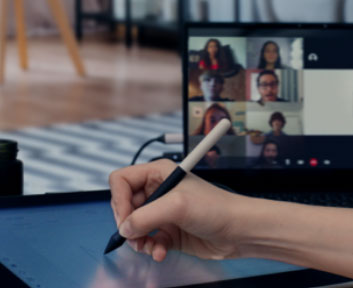
Wacom et l’éducation
Aider les enseignants et les étudiants à s'adapter à de nouveaux environnements.
- Aide




Circuit Board Workshop with KPD
Experience the Technology Behind Wacom’s “Inking Experience”
Circuit boards are the heart of Wacom’s pens and pen tablets. These flat components hold and connect electronic parts, allowing them to function as complete circuits.
At Connected Ink 2025, Wacom’s event held in November 2025, we held a circuit board–themed workshop together with KPD Co., Ltd., a company specializing in PCB prototyping.
Wacom and KPD Connected Through PCB Technology
Wacom and KPD have worked together for more than 15 years, collaborating on the prototyping of circuit boards used in Wacom pens and pen tablets. Through this long-standing partnership, Wacom pen engineer Noboru Yamaguchi was introduced to KPD’s unique initiative known as “PCB Art.”
“PCB Art” is an approach that brings a sense of playfulness to circuit board technology by transforming PCBs into works of art. The concept was born from KPD President Kazuaki Katogi’s desire to help more people learn about and appreciate circuit boards. The balance dragonfly created in this workshop is one example of this approach.
After receiving a balance dragonfly from Mr. Katogi, we were able to gain a deeper understanding of KPD’s passion for PCBs and its distinctive perspective on the technology. This encounter ultimately became the catalyst for bringing the workshop to Connected Ink.
A Hands-On Workshop to Learn About and Enjoy PCBs
During the workshop, participants created balance dragonflies using original printed circuit boards designed by KPD.
The session began with an overview of the circuit boards used in Wacom pens, presented by Wacom engineer Noboru Yamaguchi. He introduced key technical aspects of PCB design, including the design ingenuity and challenges involved in fitting complex circuitry into the slim shape of a pen. This was followed by a talk from KPD President Kazuaki Katogi, who explained the PCB prototyping process and shared what makes working with circuit boards so engaging. By seeing and touching real PCBs, participants had the opportunity to develop a deeper interest in PCB technology and how circuit boards are made.
The process of creating the balance dragonfly is simple: participants used nippers to cut out the dragonfly’s body and two wings, then assembled the parts by inserting the wings into the slots of the body to complete the piece. As the workshop progressed and participants began assembling their dragonflies, they discovered that small variations in cutting and assembly affected the center of gravity, resulting in dragonflies with unique balancing characteristics.
After completing their creations, participants took on a balance challenge by placing their dragonflies on original wooden bases or on the tip a Wacom Intuos Pro pen. Balancing the dragonfly on the pen proved especially difficult and sparked a lot of excitement. Children and adults alike became fully absorbed in the challenge, exchanging tips, celebrating successful attempts, and creating a shared sense of unity throughout the venue.
The workshop also featured a display of one of Wacom’s narrowest pen circuit boards, measuring just 2.7 mm in width. Using magnifying glasses, participants closely examined this rarely seen PCB, providing another opportunity to spark curiosity and interest in PCB technology.
 |
 |
||
 |
 |
Balance Dragonflies That Foster an Engineer’s Way of Thinking
Looking back on the workshop, Yamaguchi reflected that “An engineer’s way of thinking—asking how something could be improved—emerged naturally.” As participants tested the balance dragonflies they had made themselves, many began to ask questions such as, “Why is it tilting?” They experimented by adjusting how the wings were inserted or by sanding them down, repeatedly refining their designs. According to Yamaguchi, this process closely mirrors the fundamental engineering cycle of trial and error and continuous improvement.
The circuit boards inside pens are not something people usually have the opportunity to see, yet they are essential technologies that make it possible for a pen to function. Being able to convey the role and fascination of these circuit boards through the balance dragonfly was a deeply rewarding experience for Yamaguchi as an engineer.
The exploration of circuit board technology by KPD and Wacom will continue. Inspired by KPD’s deep passion for PCBs, which was strongly felt through Connected Ink, Wacom will continue to advance the technologies that support the act of “inking experience” and further develop the experience built around it.
 |
 |
Related Article
Read an interview in which Wacom pen engineer Noboru Yamaguchi, who led the workshop, looks back on the initiative from his own perspective.

Working Together to Protect the Vacha River: Volunteering with the Wacom Sofia team
In collaboration with Balkanka Association, our Sofia office organized a volunteering initiative to help protect the Vacha River while engaging team members and the local community in environmental action.
Read more
Our Sparks. “Burning Tree” by Khin Yadanar Htay
In her first artwork created with a pen tablet, Myanmar artist Khin Yadanar Htay depicts a tree with vibrant yellow leaves, expressing the creative spark within her heart.
Read more
Wacom × WELgee with Lenovo Japan
Fostering Cross-Cultural Exchange Through Art Around the Theme of “Hope”
People from refugee backgrounds with diverse cultural experiences came together through digital art, creating opportunities to deepen mutual understanding of cultures and values.
Read more
Donating Pen Tablets to Japan Heart and Hosting a Workshop with the Children's Care Facility in Myanmar
Wacom donated eight pen tablets to the nonprofit organization Japan Heart and held a digital drawing workshop at Dream Train, a children's care facility in Myanmar.
Read more
The Journey of Social Initiatives 2025
In FY2025, we continued to collaborate with Wacom team members and communities around the world through a wide range of projects. This is a look back at the progress and the ongoing journey of our Social Initiatives.
Read more
Watch “Mountains in Copenhagen” and Talk with Tamotsu Ito
We hosted a screening of the film as a chance to reflect on society. Together with architect Tamotsu Ito, we explored ideas around sustainability in an open conversation.
Read more
Unlocking the Potential of the Digital Inking Experience in Medical DX
Following its investment in Holoeyes, Wacom has accelerated its initiatives in the medical field. What role can the digital inking experience play in medical DX? We spoke with two team members leading the development efforts.
Read more
Our Sparks.
“From Exile to Expression” by Ala’a Al Hasani
In this twelfth installment, we feature the work of artist Ala’a Al Hasani, who fled his homeland of Iraq as a refugee and rebuilt his life in Jordan.
Read more
Updating Technology by Updating Perspective
Inspired by KPD’s passion for circuit boards, Wacom explores how new perspectives can enrich our technology, together with pen engineer Noboru Yamaguchi.
Read more
Circuit Board Workshop with KPD
In November 2025, we hosted a hands-on workshop in collaboration with KPD Co., Ltd., where participants created a balance dragonfly using circuit boards.
Read more
The Same Drawing Experience, Wherever You Are: Digital Art Workshop for Seniors
To celebrate Respect for the Aged Day, we hosted a workshop at a senior residence. This initiative was born out of our wish to bring the joy of creation to those who find it difficult to attend event venues.
Read more
Wacom Cintiq Pro 17 and Wacom Yuify Featured at Cannes Lions 2025 – Supporting Creativity on the Global Stage
At Cannes Lions, artist Satoru Kobayashi brought his ideas to life with Wacom Cintiq Pro 17. Using Wacom Yuify, his completed work during a live drawing was securely shared with the audience, ensuring copyright protection and management.
Read more
Our Sparks. “Douguya” by Bunta
We are pleased to introduce Douguya, an artwork by Bunta created as the cover art for “Chapter 4: Side Story,” one of the featured themes in Wacom Story Book Issue 2.

Wacom Book Drive – Donating 35 Creative Books to Inspire the Next Generation
To help children discover the joy of creativity, Wacom donated 35 books on art and imagination to “Minna no Toshokan: Hon to Ippitsu,” a community library in Kinko Town, Kagoshima Prefecture, Japan.
Read more
Support for Communities Affected by the Los Angeles Wildfire: Participation in “AnimAID”
As an active member of the global animation community, Wacom was quick to join AnimAID, a fundraising campaign organized by ASIFA-Hollywood to supporting recovery efforts.
Read more
Our Sparks. “Ordinary Days at Koryo High School: Inspired by Choju-Giga”
We are pleased to introduce Ordinary Days at Koryo High School: Inspired by Choju-Giga, a creative project born from the Pen Tablet Art Challenge 2024 at Omiya Koryo High School. The collaboration brought together four talented students from the Art and Calligraphy departments.
Read more
Memorialize your experience on a key tag
At Connected Ink 2024, we hosted a key tag-making workshop inspired by the theme of “Ordinary Days.” The vibrant characters featured in the key visual, designed by ktym, were brought to life with a dash of Creative Chaos.
Read more
High School Students Rising to the Challenge
Seigakuin High School, known for its focus on STEAM education, integrates Wacom pen displays into its curriculum. Enthusiastic students who love to draw took the lead in holding a digital coloring workshop, showcasing their creativity and artistic abilities.

Watch and Talk – Screening Event for Refugee Film Festival Partners
We held the Screening Event for Refugee Film Festival Partners to set the stage for thinking and talking about society and the environment with our team members.

Finding Connections to Society Through Wacom’s Instruments and Technology
We will present a comprehensive account of our journey on exploring ways to connect with society and the community through meaningful experiences, centered around the theme of ‘Finding Connections to Society Through Wacom’s Instruments and Technology.’

Reflecting on the Last Five Years: Progress and Future Trajectories of Social Initiatives
We will reflect upon our five-year journey with CEO Nobu Ide about the intention to connect the future of Social Initiatives with our Meaningful Growth.

Our Sparks. “Focus: The Autistic Superhero Loves Comic Art!” by Yvonne Wan
Discover the inspiring works of community creators who collaborate with us. Today, we feature “Focus: The Autistic Superhero Loves Comic Art!” by Yvonne Wan.

Back to the Forest/Connected Ink 2023
The theme of Connected Ink 2023 was 'Back to the Forest.' Together with our community, we shared our memories of returning to the forest of Creative Chaos.

"CREATE Program" Expanding Future Possibilities and Connecting Hopes
Wacom Canada has been involved with the "CREATE Program" at Sisler High School as a partner to support students who want to embark on career paths in the creative industry.

Our Sparks. “Join The Journey” by Arian Rahmatzai
The 'Our Sparks.' pages showcases community creators whose works inspire and collaborate with us. This time features Arian Rahmatzai's artwork, a German talent who interned at Wacom.

Supporting Children's Dreams of Becoming Creators - 1: Initiatives with Kinko Town
The aspiration of children who dream of becoming creators is what ignites our team members’ enthusiasm and drives many of our initiatives. One such initiative involved teaming up with an animation workshop in Kinko Town, Kagoshima Prefecture, Japan.

Wacom Yuify: Making the world a safer place for creators
Wacom Yuify is an innovative service being developed to authenticate creators' works by embedding invisible micro-marks into artworks and, therefore, addressing unique needs across various regions and cultures.

Initiatives in China – Bringing Digital Ink Technology to More People
Lannie Zhang, the only product manager in the Ink Division in China, took the time to talk to us about the initiatives planned to increase awareness and promote the use of digital ink technology.

Our Sparks. “At the beach in the early afternoon” by sammy
We would like to introduce the artworks by artists in Oiso Town, Kanagawa, Japan, where we have been working together to support the writing/drawing initiative.

Wacom Experience Center - A space for everyone to be creative
The Wacom Experience Center Portland was created for people to interact with the creative community in the city. We took a look back at its growth with Megan Davis, who has been playing an energetic role there.

Connected Ink 2022: What happens here is everything
Connected Ink 2022 opened with two key questions. Let’s take a look back at some of the sessions in Tokyo that explored them.
Read More
Our Sparks. “Wind Carrying Light” by Syuro
We would like to introduce the artworks by artists in Oiso Town, Kanagawa, Japan, where we have been working together to support the writing/drawing initiative.
Read More
How can we support the “writing/drawing" initiative with Oiso Town?
The partnership with Oiso Town has developed into a city-wide initiative. We spoke with Tadakuni Tsubota of the Creative BU Retail Partnership about this initiative.

A side of the Connected Ink polyhedron - 2
How do team members see Connected Ink? The next team member is Yohei Himori who is involved in the planning and operation of Connected Ink together with Heidi.

A side of the Connected Ink polyhedron - 1
How do team members see Connected Ink? The first team member is Heidi Wang who has played a key role in the planning and operations when it all began in 2016.

How can we overcome barriers that exist in society? / Call & Response
In collaboration with Heralbony Inc. and the General Incorporated Association, Connected Ink Village, Wacom launched a new initiative called "Call & Response” in September 2021.

What Lingers in the Afterglow / Connected Ink 2021
Here’s a look back at the opening and finale of the nearly 70 sessions held that day and reflect upon what has happened since Connected Ink 2021.

Our Sparks.
“The spark of love” by Jacky Yang
Our sparks meet constantly changing situations, unexpected challenges, and new opportunities. We called on our team members again to show how they see their spark in the world of today and the future.

Keep asking questions and moving forward / Connected Ink 2020
Connected Ink 2020 was the beginning of a new commitment and challenge for Wacom to continue asking those eternal questions that always play in our minds.

“Stage KOPPA”, a stage that connects stories
"Stage KOPPA" was created as a stage for Connected Ink 2020. It is a stage that changes its shape and role in response to different situations while connecting the various stories that occur there.

Our Sparks.
“Mam and Dad’s Child Interest” by Stella Wang
“Mam and Dad’s Child Interest” by Stella Wang
Our sparks meet constantly changing situations, unexpected challenges, and new opportunities. We called on our team members again to show how they see their spark in the world of today and the future.

Our Sparks.
"A moment on an autumn mountain" by Takahiro Yamamoto
"A moment on an autumn mountain" by Takahiro Yamamoto
We had an internal art contest for our Social Initiatives. Let us share the existence of the spark in our team members’ hearts with their artworks.

Online drawing class for elementary school students during stay-at-home period
Yoshinori Mita, a team member of Japan held an online drawing class together with FC KAZO and illustrator Suiiro to provide something fun for elementary school children to do during the COVID-19 stay-at-home period.

Wacom's new initiative through soccer
As an official partner, Wacom supports FC KAZO, a soccer club in Kazo City, Saitama Prefecture, Japan. We’re excited to introduce our new initiatives with this inspiring club.

Our Sparks.
"The spark is in you! Mirror portraits during times of isolation" by Oliver Madlener
"The spark is in you! Mirror portraits during times of isolation" by Oliver Madlener
We had an internal art contest for our Social Initiatives. Let us share the existence of the spark in our team members’ hearts with their artworks.

Online Sketchnoting workshop for children during school closures
Our team members in Germany organized an online workshop “Young Wacom” for the children while schools were closed due to the COVID-19 pandemic.

Support the "lives" of artists through customer support
Alex Duffey from our Americas Support team established a new program to support artists. We asked him about a story with Ms. Devon Bragg, the artist who inspired him to establish this program.

3. How KOPPA began /
The story of the Traveling KOPPA
The story of the Traveling KOPPA
KOPPA began in April 2019. Tamotsu wanted to make something that can be used again after an exhibition. We asked Team KOPPA about their thoughts.

2. No need to destroy it anymore /
The story of the Traveling KOPPA
The story of the Traveling KOPPA
We put it together ourselves, set it up, put it back, then travel together again. The Traveling KOPPA, our new display furniture came to be.

1.Meeting KOPPA /
The story of the Traveling KOPPA
The story of the Traveling KOPPA
KOPPA started out as a challenge: Tamotsu Ito, an architect from Japan, wanted to utilize leftover building materials. Our meeting was pure happenstance.

Our Sparks.
“That Spark Inside” by Simone Wolters
“That Spark Inside” by Simone Wolters
We had an internal art contest for our Social Initiatives. Let us share the existence of the spark in our team members’ hearts with their artworks.

Marketing lecture for future engineers
We gave a marketing lecture for students who are learning to be engineers at the National Institute of Technology Tokyo College.

Efforts by our sales member, who are responsible for a pen tablet until the very end
Every year, we take pen tablets that have been sitting in our warehouse and gift them to high school clubs and winners of high school art competitions to help students create digital contents.

For the Future of Education
Lifelong Ink x AI
Lifelong Ink x AI
"AI Ink for Education" was developed to capture eye movement information and pen movements while learning, in order to ascertain the characteristics of learning by each student and to create an educational environment suited to each student.

Wacom Intuos have been introduced in a school to make classes more fun and creative
Yoana Simeonova, a software designer working in Bulgaria, introduced Wacom Intuos in a school to make children's IT classes more fun.